
When I saw the news about PlayStation stepping further away from physical discs, I did not really feel shocked; it felt more like something I had been circling around for years had finally become impossible to ignore, proving that physical media still matters. I’m certainly not the first to have these thoughts and won’t be the last. Physical media is definitely a rebellious buzzword at the moment. It’s easy to look at a shelf full of plastic cases and write the whole thing off as a sentimental attachment to the past.
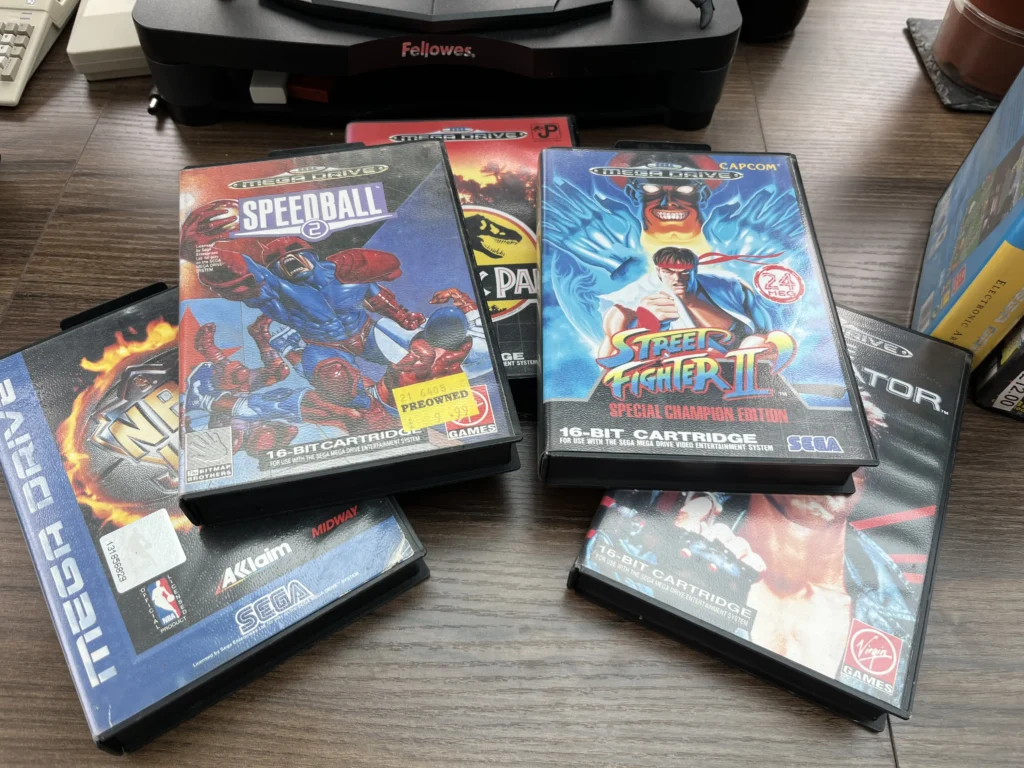
We live in a culture that treats convenience as the ultimate metric of progress, where downloading a file instantly or streaming a catalogue of thousands of titles is framed as absolute freedom. But if my recent decision to step back from Game Pass taught me anything, it is that endless access often comes with a quiet, unlisted tax on our attention, our focus, and our sense of permanence. We lose that intentionality in our hobbies and downtime. If Game Pass made me question endless access, physical media removal made me ask what I actually want to own in my life. I know we’re not talking mortgage level commitments here but my downtime is important to me and the choices I make day to day.
This isn’t an angry, anti-digital rant. I use digital store-fronts, and I appreciate the sheer utility of being able to boot a game on a Steam Deck or a PC without leaving the chair. But we are moving rapidly toward a landscape where convenience isn’t just an option, it’s becoming the only option. When everything shifts to cloud streams, account permissions, and brittle user access licenses, the very definition of what it means to “own” something begins to erode. Physical media isn’t just about owning plastic; it is about keeping a small amount of control in a hobby that is becoming more temporary and dependent on third-party permission.
The Architecture of Intent
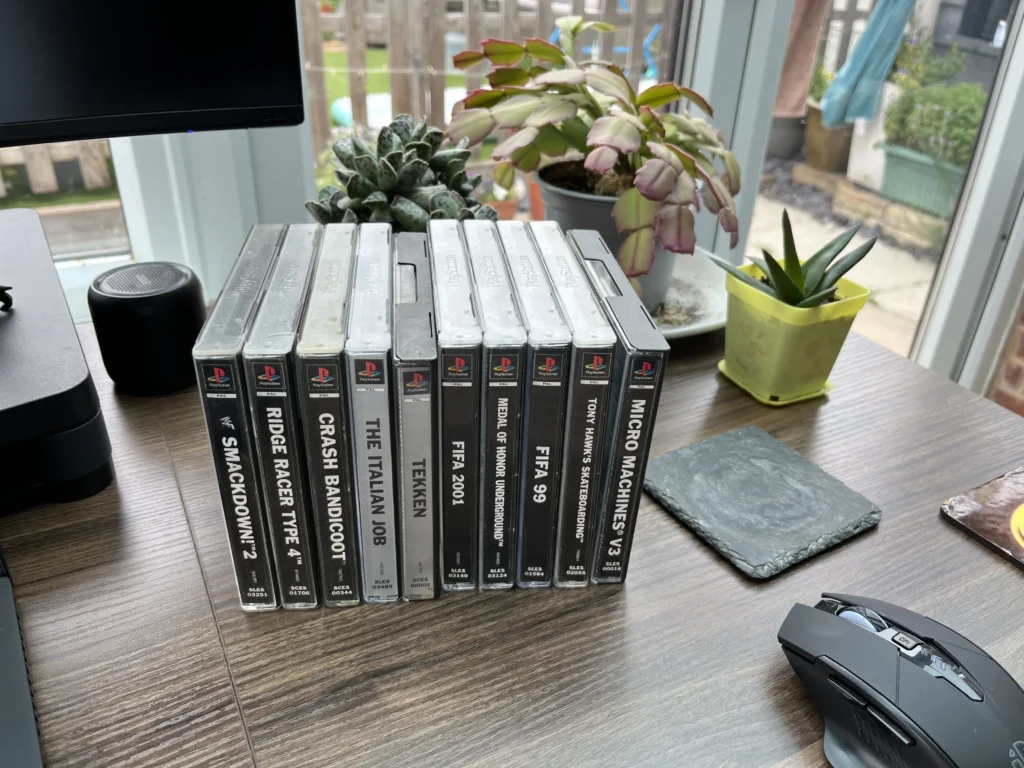
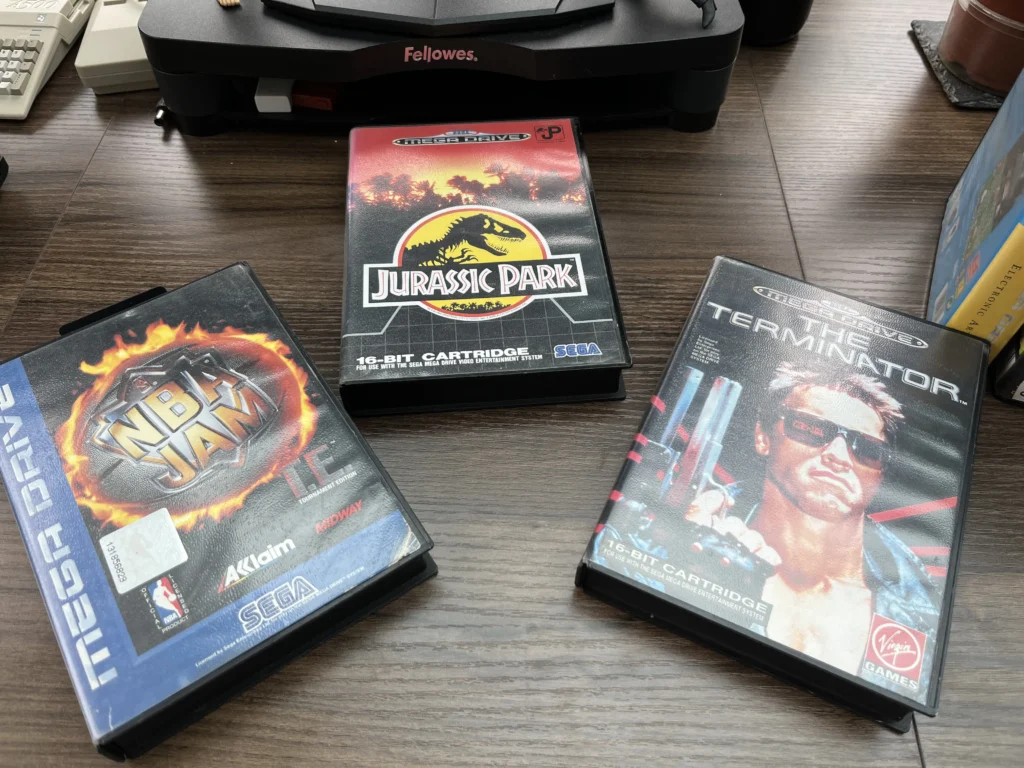
We rarely talk about how the physical geometry of our living spaces shapes the way we interact with our hobbies. In my own home, the journey of my game collection is structured in deliberate layers. The bulk of the deep archive lives out of sight in the garage or tucked away into large storage cupboards,safeguarded, but not part of the daily routine. The real operational centre is a small, curated display shelf right next to the main living room TV. It holds a strict allowance of roughly thirty-five disc cases, a handful of Mega Drive boxes, and an IKEA box containing a few select PS1 and retro favourites. I’ll be honest this is probably down to necessity of a multi-use living space and balancing family dynamics with my own desires. Having 300 games spread out across the living room just isn’t going to fly in my house!
This limitation doesn’t have to be a negative though; it is a curated menu.
When you have instant access to thousands of games through digital libraries and massive emulation ROM sets, your brain handles abundance poorly. You sit down after a long day of work or family responsibilities, completely exhausted, and you face a glowing wall of digital app tiles. Instead of playing, you browse. You scroll past masterpiece after masterpiece, hit by the choice paralysis of the “Netflix effect,” until your precious window of free time has evaporated and you haven’t actually settled into anything. The same can also be said for too many physical games in your face everyday. That’s why curation in some manner is key.
A physical box sitting on a shelf gives that restless energy somewhere to land. It turns a vague, overwhelming desire to “play something” into a concrete, intentional choice. The minor friction of getting up, walking to the shelf, taking the disc out of the case or grabbing a cart, and inserting it into the console acts as a psychological commitment. Because you invested that tiny bit of deliberate effort, you are far more likely to sit back down and give the game a proper chance to grab your attention. That routine of friction also supports sessions in reverse, the effort to change a game gives you that little bit more commitment to play another 10 minutes. It is a simple mechanism that routinely transforms a tired ten-minute glance into two hours of genuine, immersive relaxation avoiding the doom scrolling.
The Hidden Value of Friction
The modern tech industry is obsessed with eliminating friction, but in our haste to make everything seamless, we often strip away the very sensory rituals that build lasting memories. When I look back at my earliest gaming beginnings, the memories that stick aren’t just the images on the screen, but the physical interactions surrounding them.
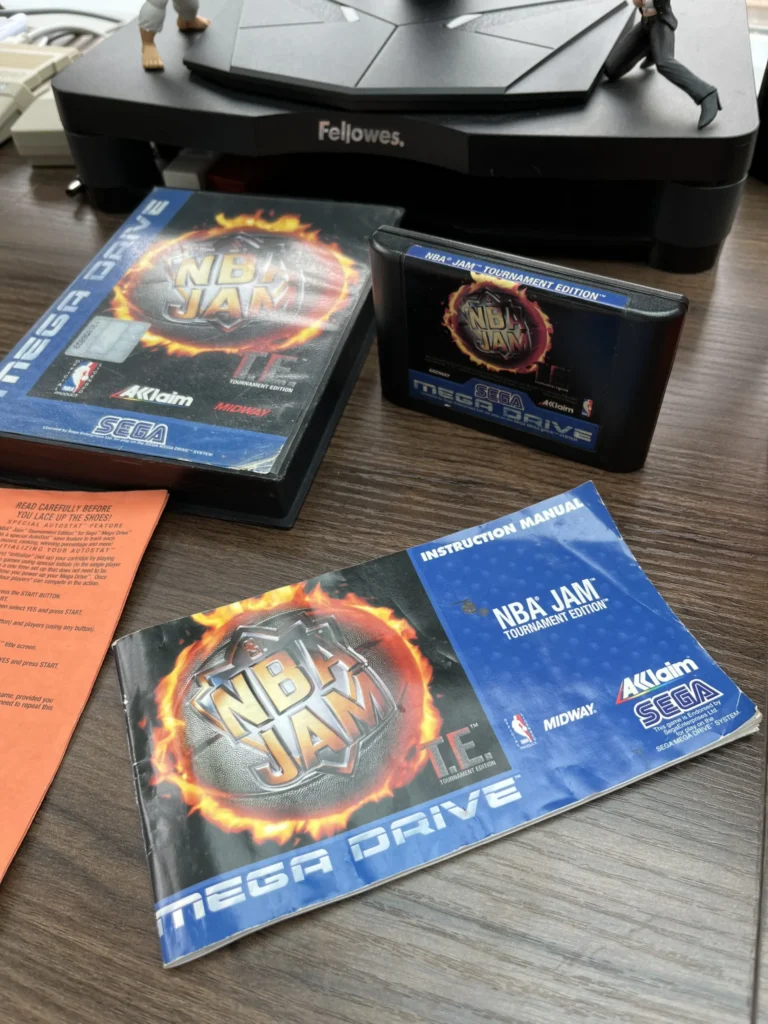
I still remember the distinct, heavy mechanical click of sliding a Sonic the Hedgehog cartridge into a Sega Mega Drive at a friend’s house, or scrounging spare coins from my parents to feed into a Sunset Riders arcade cabinet just to feel the tactile urgency of staying in the game. There was a specific weight and ink smell to holding a full-art game manual or a gaming magazine on the way home, absorbing the layout and the artwork before you even reached the television. Even the ritualistic hassle of blowing into a stubborn NES cartridge to get Mario Bros. or Chip ‘n Dale to read,while probably terrible for the hardware in the long run, gave the experience physical muscle memory.
Old media had genuine flaws; discs scratched, cartridges failed, and manuals got ripped or lost. Yet that exact vulnerability required us to care for what we had. When you saved up to buy an individual game, or hit up the local Blockbuster on a Friday night to grab a copy of NBA Jam for the weekend, you were locked into that choice. You didn’t instantly abandon a game the moment you encountered a difficult level or a janky mechanic because you didn’t have a subscription button offering fifty other alternatives a millimetre away. You engaged fully, you worked through the challenging parts, and you built a locked in relationship with the experience.
Real Ownership Over Rented Possibility
This brings us to the core technical reality that modern digital store-fronts prefer to leave in the fine print: when you click “buy” on a digital store front, you aren’t buying a game. You are purchasing a conditional, non-transferable license to access that file for as long as the platform holder chooses to maintain the servers and licenses. The moment an account gets locked, a store closes, or a licensing agreement expires, that access can vanish completely into the ether. “You will own nothing and like it”, as the sad meme mantra goes.
We are already witnessing the historical fallout of this architecture with the closure of the Xbox 360 Marketplace a short while back and the shifting horizons for legacy platforms like the PS3 and Vita. Preservation shouldn’t feel like a temperamental science project or a specialised technical puzzle box that requires a verbal disclaimer to operate. My journey into building a localised, SSD-powered PS2 Fat setup, or my modded OG Xbox and Everdrive Pro on the Mega Drive wasn’t born out of a desire to look impressive on paper, but to ensure that native compatibility and that feel as intended in the original gameplay.
That authentic feel is something that emulation just can’t replicate regardless of the impressive scaling, resolution and performance boosts. When you own the physical disc, the software cannot be quietly patched out of existence, de-listed, or locked behind an expired subscription tier. It sits quietly on your shelf, entirely agnostic of server statuses, corporate mergers, or internet connectivity. It belongs to you. It’s your library.
The Take-Home Message
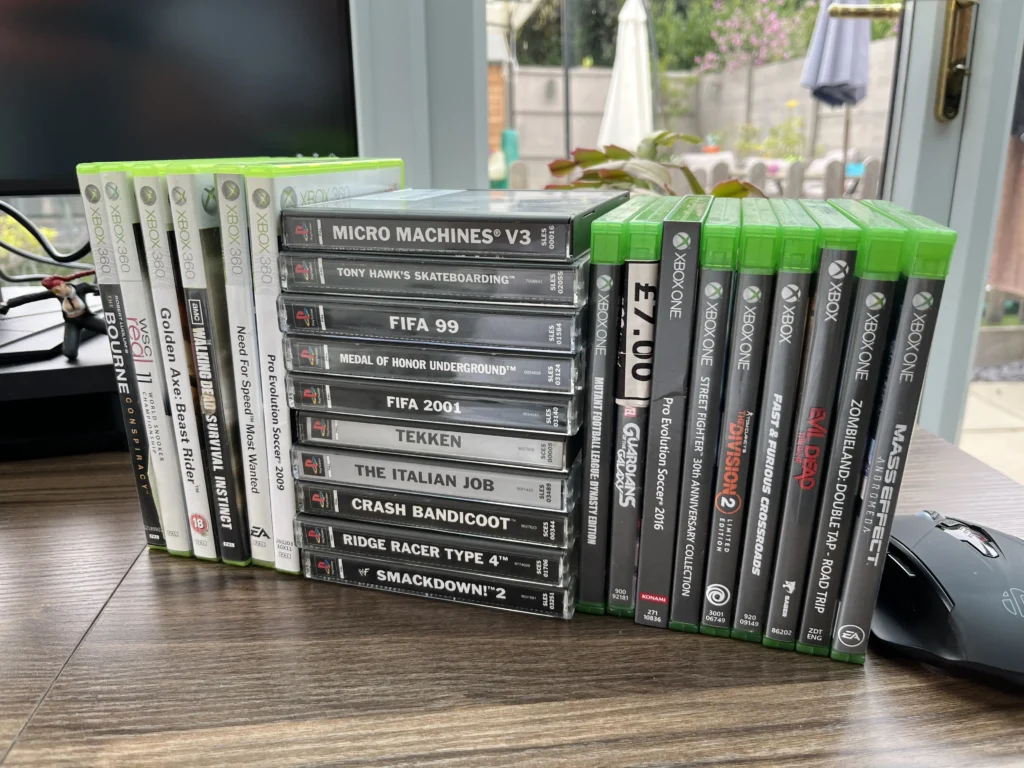
Ultimately, the defence of physical media isn’t a retreat into empty nostalgia or a rejection of modern technological strides. It is a conscious, grounding framework for reclaiming our relationship with the things we spend our finite time, money and attention on. A personal library shouldn’t feel like an administrative task list, a mounting mountain of digital debt, or an algorithmic treadmill designed to keep you permanently grazing across endless choices.
By deliberately choosing physical curation, we trade the exhausting illusion of infinite access for the quiet, lasting clarity of true possession and choice. A shelf of real games is a stable set of doors that remain ready to open whenever you choose, offering a calm, intentional sanctuary where the hobby finally feels like yours again.
So stay you, stay real and keep gaming.
A few more from Retro Tech Tonic
- Stepping Back From Game Pass: Reclaiming Intentional Gaming
Stepping back from Game Pass wasn’t a dramatic statement — it was me reclaiming intentional play, and dropping the pressure to maximise a subscription. - Backlog as a Library: Why I Stopped Treating Games Like Tasks
The same mindset, just from the other side: less “clearing”, more choosing, and a healthier relationship with what you already own. - Why Do We Game? The Honest Reasons I Keep Coming Back – A reflective look at joy, immersion, nostalgia and self-reward — and why gaming still matters in everyday life.
- Jusant Review
A proper example of the kind of discovery that does justify subscriptions sometimes — quiet, focused, and the sort of game you remember after the credits. - Retroid Pocket 6 vs Pocket 5: Why I’m Not Upgrading Just Yet
Same approach, different topic: enjoying what I’ve already got instead of treating upgrades like the default setting. - The best way to play PS2 games in 2026? A Journey into PS2 Fat Mods
The practical side of the “library” idea — building a setup that makes it easier to actually play your collection, not just hoard it.
Further Reading away from Retro Tech Tonic
The Video Game History Foundation: The Game Preservation Crisis
- Direct Article Link: Video Game History Foundation Official Site
- The Related Academic Study PDF: Survey of the Video Game Reissue Market in the United States (Note: If you are looking for their massive data drop regarding the endangered status of 87% of classic games, this is the exact whitepaper PDF they co-authored with the Software Preservation Network).
Polygon: Ubisoft’s server shutdown of The Crew is a terrifying precedent for digital ownership
Ars Technica / Valve: You don’t own the games you buy on Steam
- Direct Industry Reporting Link: IGN: Steam Now Warns Customers They’re Buying a License, Not a Game
- Direct Tech Policy Link: Rock Paper Shotgun: Steam warns customers at checkout they are only buying a digital license (Note: The exact 2024 Ars Technica piece underwent headline changes due to system compliance with California Assembly Bill AB 2426. These direct links from IGN and RPS map out the exact Valve checkout disclosure update you are referencing).

About the Author
I am Danny McGough, the founder and editor of Retro Tech Tonic.
For my day job, I work in higher education as an Assistant Professor and Course Director, spending my time designing and managing complex academic structures and modules or exploring into any research that interests me . My latest specialisms are around Building Information Modelling, Construction Innovation and Artificial Intelligence.
Retro Tech Tonic is where I step away from that institutional rigidity. It is my dedicated space to pick up a soldering iron, argue the architectural value of physical game media, and push back against the frictionless convenience of modern tech. I believe technology should serve as an intentional, human-controlled tool, and I write to figure out exactly where those boundaries lie.