
Why do we game? I’ve been thinking about it properly lately, and the answer isn’t one neat thing — it’s a mix of reasons that change with life.
Sometimes it’s obvious. Sometimes it’s not. And if you’re anything like me, the reason you pick up a controller on a Tuesday night isn’t always the same reason you’ll sink hours into something on a quiet weekend.

So why do we game?
So why do we game? Sometimes it’s simple joy. Other times it’s nostalgia. Or maybe it’s stimulation or relaxation. It can also be self‑reward, habit, immersion, completionism, or simply a sense of accomplishment.
Even writing that list out, it’s clear gaming isn’t “one thing”. It’s a stack of needs and moods. Sometimes it’s comfort. Sometimes it’s energy. Sometimes it’s just wanting your brain to stop spinning for a bit.
Enjoyment, but also relief
I find gaming relaxing. When my brain is often very wired, gaming helps give me something predominantly relaxing to focus on. It gives me a lane to put my attention in — something that isn’t just background noise, worry, or ten different tabs open in my head.
And it helps me step away from the stresses of the real world. Jobs. Kids. Emotional weight. Having a hobby as an escape can genuinely reduce stress — something without the consequences and pressures of everyday life.
That doesn’t mean running away from life. It’s more like stepping outside it for a moment, like taking a deep breath without someone asking you to be productive while you do it.
Immersion: it’s not just “distraction”
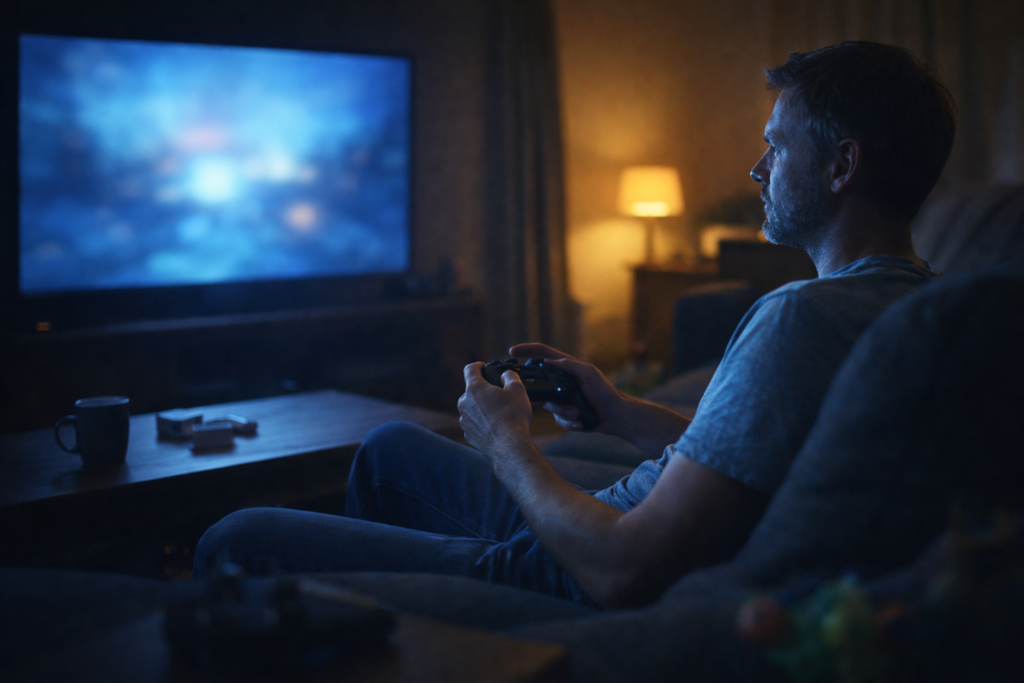
Immersion is a big one for me.
Just like movies or books, gaming can open you up to immersing yourself in beautifully curated worlds. A chance to explore unique experiences not available in the real world.
That can be fictional stuff — Cyberpunk, Skyrim, The Witcher — places you’ll never physically go, but somehow still feel like you’ve spent time in. Why gaming doesn’t get the same credibility as other forms of media and storytelling, such as literature, I genuinely don’t understand. And then there’s the flip side of it too: simulation, which can be achieved, arguably, at a more immersive level than both literature and cinema.
Codemasters caught onto simulation games very early in the late 80s with manual, sim-style games — BMX Simulator, Grand Prix Sim, and Pete Sampras Tennis. David and Richard Darling both knew there was a strong market for giving people the opportunity to play out their sporting dreams in a visual environment.
And that side of gaming has only grown. It’s now a multi-billion-pound territory: FIFA, PGA golf, basketball, and racing sims. Entire worlds built around letting you live out something you might never do in real life — or might only ever do as a spectator. Gaming gives you that chance to actively immerse yourself in the simulation, with a hands‑on level of impact, directly affecting outcomes with every input.
Progress, goals, and the completionist itch
There’s another layer to immersion as well.
Having these immersive worlds gives us the opportunity to aim towards and achieve curated personal goals or achievements. We can get that dopamine hit from completing a milestone. That gratification, reward, and a sense of achievement.
And while the platform might be virtual, the reaction in your brain doesn’t care. The feeling is still real. You still get that “yes” moment when something finally clicks, when you finish a level, nail a boss, hit a personal best, or wrap up a story that’s been sitting with you for days. Rather than just passive involvement, that active engagement creates reactive emotions and dopamine hits within the brain — lighting up the grey matter rather than dumbing it down.
That’s part of why even short sessions can feel valuable. You can have a busy life, but still get a clean little sense of progress in the middle of it.
Nostalgia isn’t an accident
Being an avid retro gamer, we also shouldn’t ignore the nostalgia influence on gaming.
A lot of what we chase in games is the same or similar neurological reactions we once had as kids or younger selves. That buzz of picking up a physical game cart, popping it into a Mega Drive or SNES, and bathing in the sensory hits of the 8 or 16-bit era. Or dare I say aloud, taking a disc and popping it into the PS2 or even Xbox 360 and reliving those nostalgic memories — because, let’s be truthful, the 360 is now retro in one sense or another.
It takes us back to a simpler time in life.
And honestly, nostalgia isn’t just “remembering”. It’s a feeling of safety. Familiar sounds, familiar rhythms, familiar rules. You already know how it works. You already know who you are when you play it.
There’s a bigger conversation here — memory, comfort, identity, all of that — and I do want to dig into it properly later. But even on the surface level, it’s worth saying plainly: nostalgia is part of why this hobby sticks.
Self-reward, permission, and dropping the guilt
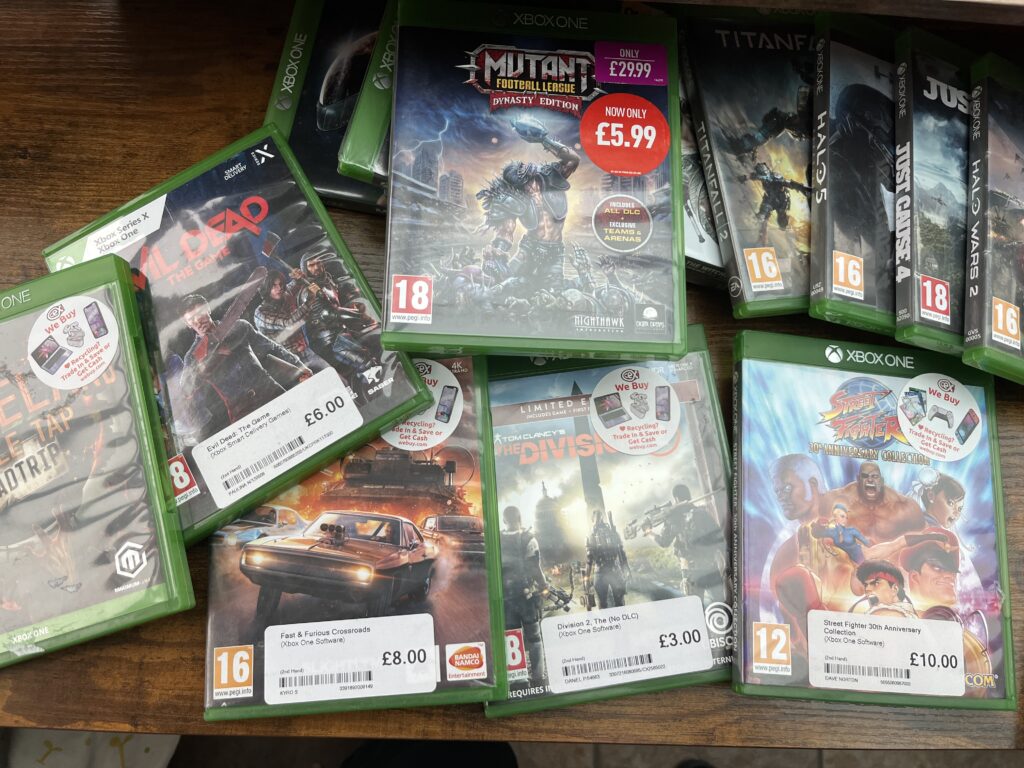
Gaming can also be a chance for self-reward.
Giving us the opportunity to reward ourselves — ticking off real-world tasks like work and family — with something that really feels like “me time”.
And this is where I think a lot of people quietly struggle: the hobby guilt. The sense that you’re wasting time, or you “should” be doing something else. Especially when you’re tired. Especially when life is full.
But sometimes the healthiest thing you can do is allow yourself the chance to enjoy the hobby guilt free.
You’ve earned this.
At some point, we’ll go deeper on the “why” behind all of this — the psychology of it, the way attention works, and why certain games hit us harder than others. This is just me putting the honest surface‑level truth down first, before we really explore the deeper side of the psychology.
Closing thoughts
I don’t think there’s one clean answer to why we game. I think it shifts depending on the season of life you’re in.
Sometimes it’s pure joy. Sometimes it’s relaxation. Sometimes it’s immersion and wonder. Sometimes it’s nostalgia pulling you back to something familiar. Sometimes it’s that little hit of achievement dopamine when you complete something that feels contained and manageable.
And maybe that’s the real point.
Gaming can mean something different to each of us, and it can change on each occasion. Gaming gives us something we don’t always get elsewhere: a place to focus, a place to feel, a place to relax and unwind, and a place to just be for a while — without needing to justify it.
Why not check out more from us
Some interesting external info around this topic:
American Psychological Association – Video Games – Balanced, research-informed page on how video games relate to wellbeing, cognition and behaviour.
Flow (Psychology) – Overview – Explains the concept of flow — immersion and deep engagement — which ties directly into your immersion section.
Oxford Internet Institute – Why People Play Video Games and How It Links to Wellbeing – Academic research exploring links between games and self-reported wellbeing outcomes.

James Mikaelson
Gaming Culture & Reflections
James writes the more reflective side of Retro Tech Tonic — exploring gaming habits, nostalgia, ownership versus subscriptions, choice paralysis, and the way games fit into everyday life when time is limited. His articles focus less on hype and more on why we play, how gaming evolves over time, and how to keep the hobby enjoyable rather than overwhelming.