
He’s back…

Every now and then a game lands that instantly takes me back to a very specific time and place. Terminator 2D: No Fate did exactly that. From the moment it booted up on my Nintendo Switch OLED, it felt like a straight shot back to the 16-bit era — the kind of licensed arcade action games I loved in the Mega Drive days, when Robocop, Terminator and similar gritty shooters ruled living rooms and arcades alike.
This isn’t a sprawling modern reimagining or a reinvention of the franchise, but rather a new kick start back into a franchise and genre that screams fun! It knows exactly what it wants to be, and more importantly, what it doesn’t want to be. Yes there are some limitations, which we’ll cover later but for now lets just enjoy this pure joy jump back into nostalgia.
I played it on the Switch OLED (Day One Edition), and honestly, it felt right at home there. The vibrant OLED screen really suits the crisp pixel art, and the handheld format complements the arcade-style pacing perfectly. I sat there while my partner watched ‘nothingy’ tv and smiled my way through. That said, I’ll almost certainly double dip on Xbox Series X later as I’ve really caught the achievement hunting bug again — and this is exactly the sort of game that rewards repeat runs.
Short, sharp, and unapologetically arcade
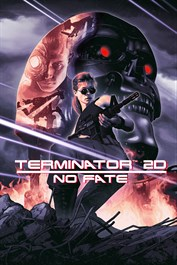
The game is short, no point dancing around that — but this is very much by design. Terminator 2D: No Fate is an arcade game at heart, built around replayability rather than sheer length.
My first run-through on easy was very much a relaxed, story-focused dash I wanted to enjoy the story in a nice low cognitive manner— perfect for just enjoying the nostalgia and presentation without friction. After that, bumping the difficulty up is where the real arcade DNA starts to show.
The timer and scoring systems do a lot of heavy lifting here. Even though the game can feel very approachable on lower difficulties, those classic arcade elements constantly push you to replay, optimise, and improve. It’s not about simply finishing it once — it’s about shaving seconds off a run, squeezing more points out of encounters, and tightening up your performance. Any slip towards an outcome is heavily punished in terms of the level grading system so pushing for a clean run is key.
A roughly 60-90 minute speed run actually felt spot on for me. Finish a run, put it down, then later on jump straight back in chasing better scores or missed achievements. That rhythm works brilliantly, especially if, like me with the responsibilities of real dad and work life, you don’t always have the appetite for 40–100 hour commitments.
Combat, bosses, and a few rough edges
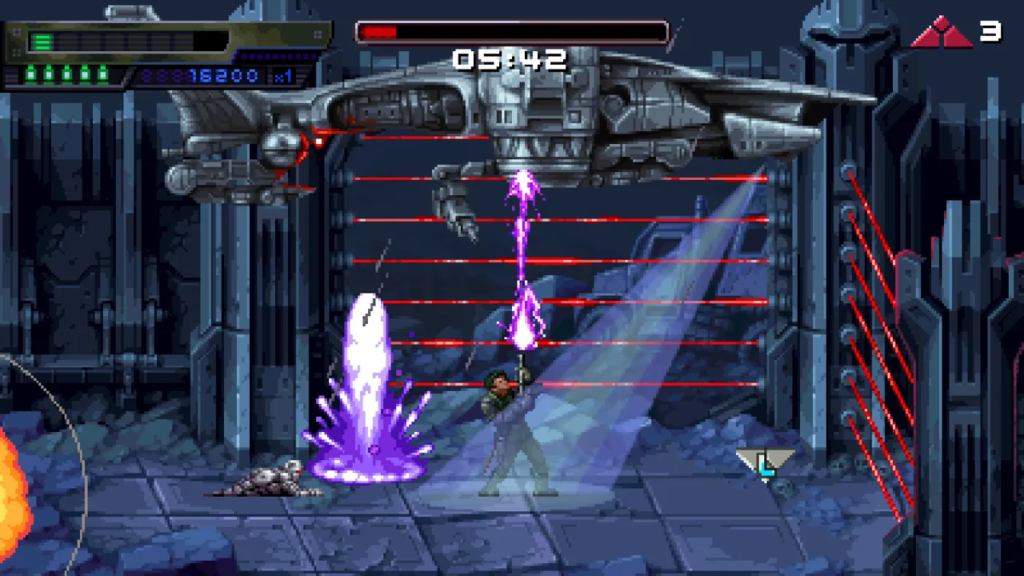
Moment-to-moment gameplay is satisfying and direct. There’s a simplicity to it that I really appreciated — no bloated controls, no overcomplication, no mammoth new system to get to grips of. That said, not everything lands perfectly.
Some of the boss encounters feel a little clunky, particularly in how they telegraph attacks or lock you into specific patterns, but then this is partly by design of side scroll shooters. They’re not bad, just a bit stiff compared to how fluid the rest of the combat feels. I did find myself thinking that one or two extra levels, or a slightly longer campaign, would have been welcomed. Not essential but appreciated.
Presentation absolutely nails the tone
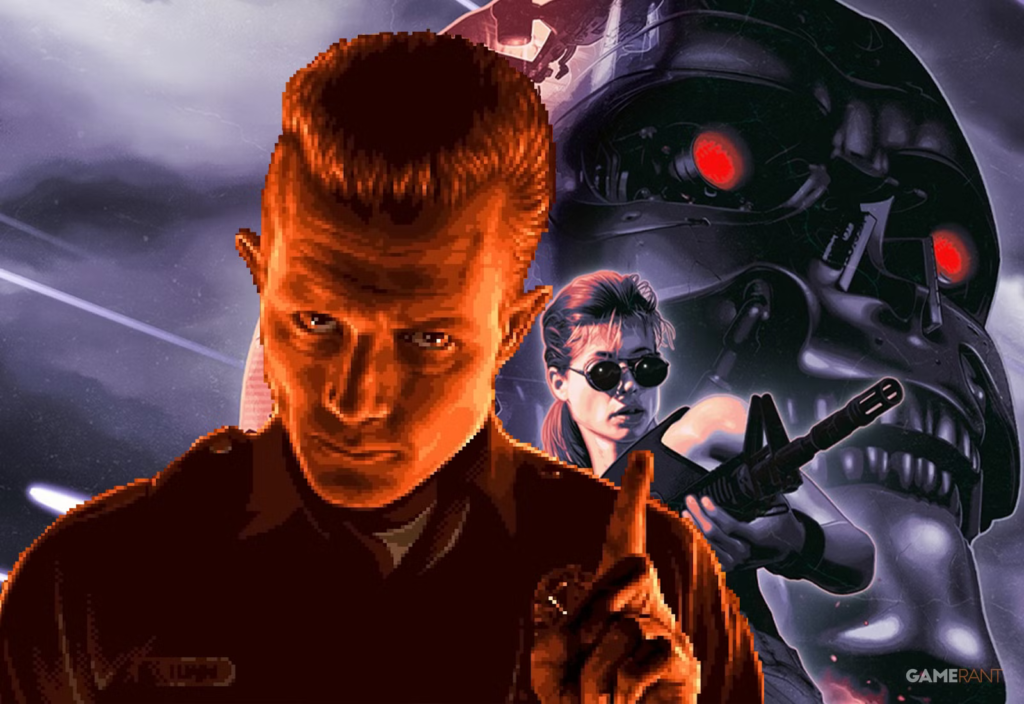
Visually, the game is crisp, confident, and very deliberate in its style. The pixel art fits the Terminator world perfectly, maintaining a consistently gritty tone and colour palette without feeling muddy or overdone. Everything feels cohesive — environments, enemies, animations — it all knows what era it’s drawing from.
The music deserves special mention. Licensed tracks and score elements lifted from the original films add a huge amount to the immersion and really hit my sweet spot. When those familiar themes kick in, it genuinely hits that nostalgia nerve in an amazing way that feels. Certain moments — especially the motorbike chase and prison escape taking me right back to my first watches of the movies— stood out as proper highlights, helped massively by the soundtrack driving them forward.
Replayability is the real hook
Between the achievement system, subtle branching choices, and classic arcade scoring mechanics, replayability is clearly the core hook. This isn’t a one-and-done experience — it’s designed to be replayed, refined, and gradually mastered.
That makes it ideal for busy gamers — people with jobs, kids, and limited gaming windows — but it’s also very accessible for newcomers who might not have that deep Terminator nostalgia baked in. If you do have that nostalgia, though, it hits harder in a perfect way.
Value and final thoughts
At full price, this probably isn’t a £40/$50 game for everyone. I went physical because I’m a fan, and physical is important to me, but digitally at around £25, Terminator 2D: No Fate becomes a very easy recommendation.
Overall, Terminator 2D: No Fate is exactly what it sets out to be: a tight, arcade-style love letter to both the franchise and a specific era of gaming. It doesn’t overreach, it doesn’t pad itself out unnecessarily, and it respects your time.
If you’re chasing nostalgia, enjoy replay-driven arcade design, or just want something you can genuinely finish and then keep coming back to, this is well worth a look — especially at the right price.
A strong recommendation, with the caveat that you go in expecting quality over quantity rather than length.
Or check out the amazing game design team that broyught us Terminator 2D: No Fate here
