
Backlog as a library is the only framing that stops my games from feeling like a quiet little debt.
Why the word “backlog” feels like debt
Because the word “backlog” is loaded, whether we admit it or not. It sounds like something you’re behind on. Something you should be getting through. It hints at burden. It hints at guilt. It hints at work.
And gaming is meant to be the opposite of that.
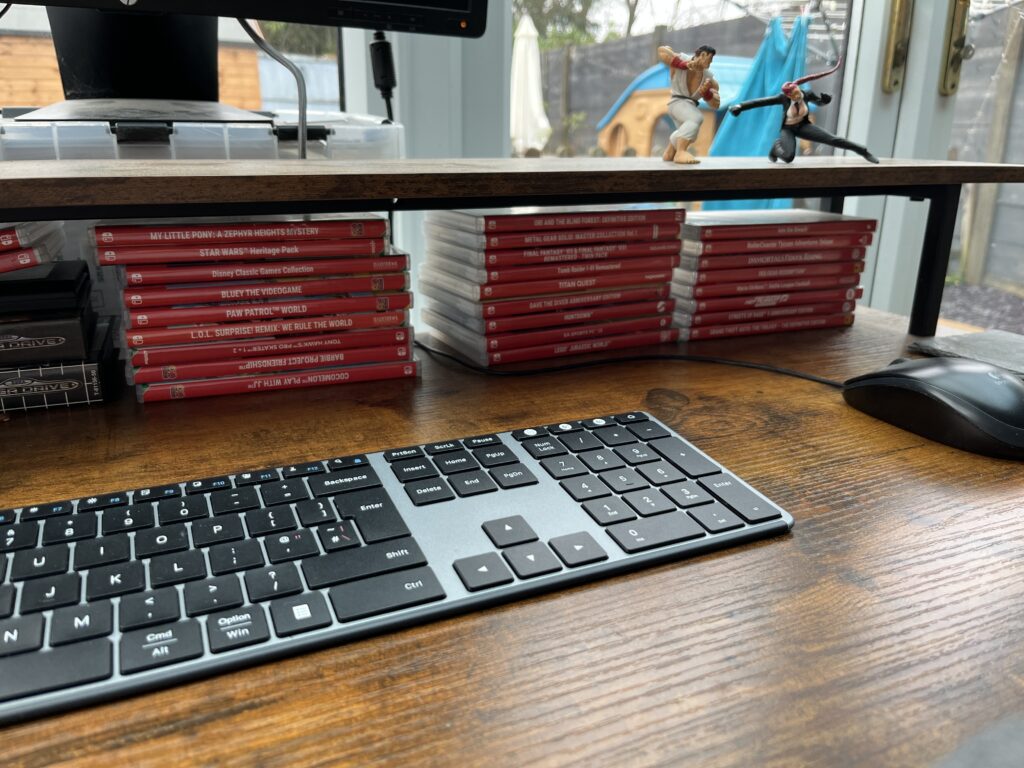
What’s funny is I don’t even keep my games like someone trying to “clear a backlog”. I keep them like… well, like a library. I’ve literally got layers of it.
The bit I actually see and touch
There’s the deeper storage stuff — a big cupboard with the bulk of it. Then there’s some that’s effectively “archive” in a garage space: still mine, still part of the collection, but not easily accessed. And then there’s the bit that matters most: the games in the living room, near the main TV, on the small shelf I actually see when I sit down.
And honestly, it’s no collection to shout about or show off — but it works for me. It feels attainable, and it fits the reality of adult life where time, space, and energy are all limited. One day I’d love to have it all neatly displayed and fully OCD-organised, but for now it serves its purpose.
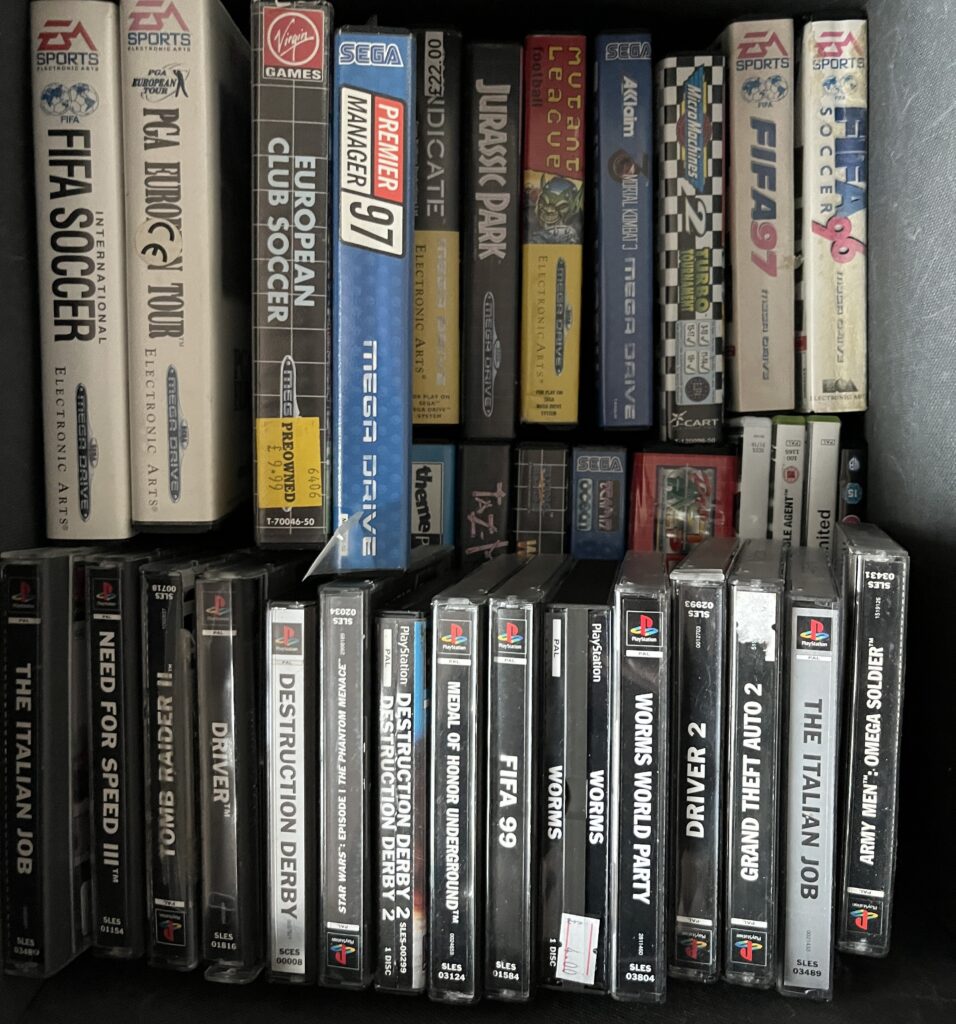
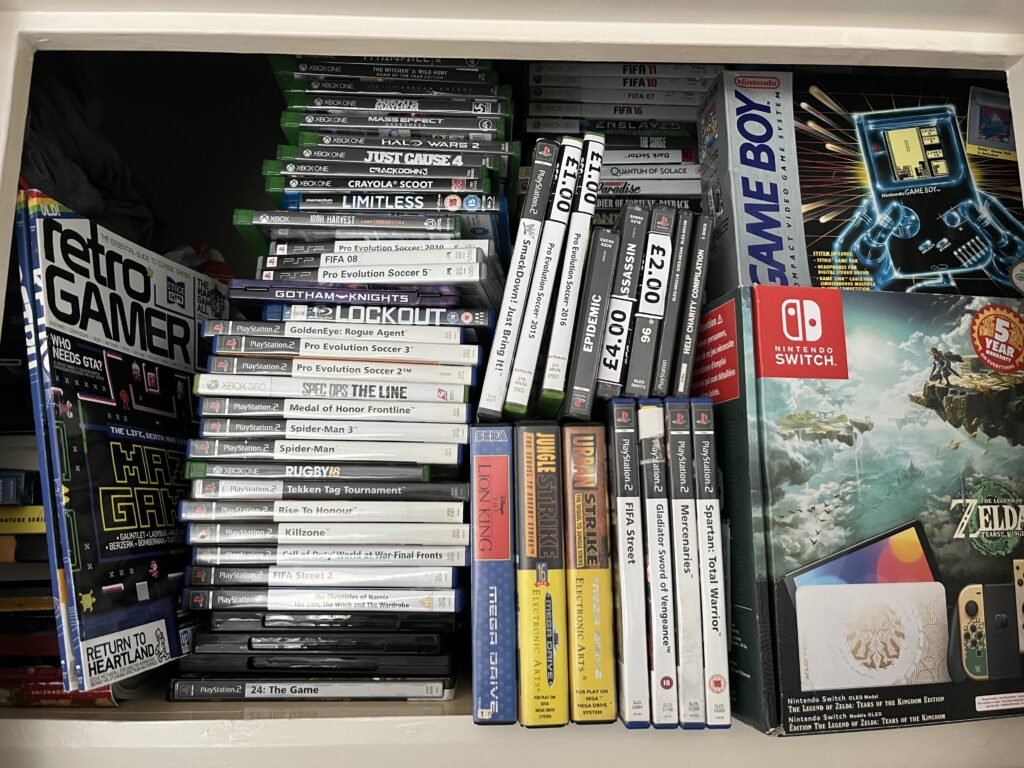
The modest living room ‘allowance’ holds roughly thirty-five disc cases, plus about twenty other disc games and a handful of Mega Drive boxes. And recently, I’ve even got an IKEA box with around twenty Mega Drive games and about ten PS1 games tucked in it. That’s not a backlog. That’s a menu.
It’s also a tell.
Because the stuff that’s close becomes the stuff you actually play — and that’s by design.
When choice turns into browsing
I’ve got no shortage of options elsewhere. Between digital libraries and emulation, I could drown in choice. I’ve got devices full of old games. I’ve got collections and ROM sets and all the modern convenience in the world. And I’m not anti-digital either — for years, I bought digital on Xbox and Steam and didn’t think twice. In some cases, it felt sensible. If a game had little resale value anyway, digital didn’t bother me.
But over time, I noticed something: convenience doesn’t always lead to playing. Sometimes it leads to browsing. Sometimes it leads to that horrible feeling of having “loads to play” but not knowing what you actually want.
Digital can be thousands of games deep, and that sounds amazing until you’re tired, it’s late, and your brain starts doing that thing where it turns fun into a decision-making task. Too much choice. Analysis paralysis. And then suddenly you’ve spent your precious window of free time scrolling tiles instead of actually settling into anything. It’s the same trap as Netflix or Prime when you’re tired: endless choice, and somehow nothing lands.
Why physical creates intent
Physical works differently for me.
If I can see a box on a shelf — a Mega Drive cart, an old 360 case, something sitting there with a bit of presence — it’s like it gives the urge somewhere to land. It turns a vague “I should play something” into “yeah… I actually fancy that”.
And there’s something else going on too: intent.
Having too many options immediately to hand can do the opposite of freedom. It can turn into a weird lock-up point where you freeze — analysis paralysis — and the whole thing starts to feel like decision-making rather than relaxing. That’s a whole conversation in itself, but I feel it every time I’ve got too much in front of me.
When you play something you’ve chosen deliberately — especially when it’s right there in front of you — you don’t jump around as easily. You commit a bit more. Even if you only meant to play for ten minutes. It’s strange how often ten minutes becomes an hour, and an hour becomes two, and you finish the session feeling more relaxed than when you started. That could be because, by choosing and playing with intent, you’ve already made a firmer commitment.
Or — and I’ll be honest — it might be something even simpler: the tiny bit of friction helps. Getting up, walking over, swapping the game… it’s just enough effort that once you’re sat back down, you’re more likely to give it a proper chance to grab you. That sounds daft written out, but for me it rings true.
That’s the bit I care about. That shift from “I can’t be bothered” to “I’m glad I did”.
Because most of the time, the barrier isn’t a lack of games. It’s real life. It’s work. It’s family. It’s tiredness. It’s that low-level guilt some of us carry when we’re doing something that isn’t “productive”. Like we’re wasting time, even when we’re supposedly doing the thing that helps us recover.
If a hobby starts feeling like admin, something has gone wrong.
So I try not to treat my library like a to-do list. I try not to turn it into targets. I try not to let the word “backlog” drag the mood of the whole thing down.
For me, the healthier framing is simple:
These aren’t tasks. They’re opportunities.
A library isn’t a debt you repay. It’s a set of doors you can open when you feel like it. And when life is busy, and your head is full, that matters more than any completion percentage ever will.
A few more from Retro Tech Tonic
- Why Do We Game? The Honest Reasons I Keep Coming Back – A reflective look at joy, immersion, nostalgia and self-reward — and why gaming still matters in everyday life.
- Start Here
If you’re new around here, this is the cleanest way into what Retro Tech Tonic is actually about — not hype, not churn, just a calmer way of enjoying games and tech. - Retroid Pocket 6 vs Pocket 5: Why I’m Not Upgrading Just Yet
Same mindset, different topic: how I’m trying to enjoy what I’ve already got instead of treating upgrades like the default. - The best way to play PS2 games in 2026? A Journey into PS2 Fat Mods
This is the practical side of the “library” idea — building a setup that makes it easier to actually play your collection, not just hoard it. - Terminator 2D: No Fate Review
A proper example of the kind of game that fits this approach: pick something, commit to it, enjoy the time with it, and stop worrying about what you “should” be playing next.
Some content further afield
- Backloggery — A simple tracker that helps you treat your games like a collection to dip into, not a task list to “clear”.
- Backloggd — A tidy way to log what you’re playing, what you’ve finished, and what you want to try next — more like a gaming journal than a checklist.
- HowLongToBeat — Great for choosing games that match your actual time and energy. Useful when you want something that’ll land in one or two sittings.

James Mikaelson
Gaming Culture & Reflections
James writes the more reflective side of Retro Tech Tonic — exploring gaming habits, nostalgia, ownership versus subscriptions, choice paralysis, and the way games fit into everyday life when time is limited. His articles focus less on hype and more on why we play, how gaming evolves over time, and how to keep the hobby enjoyable rather than overwhelming.
Pingback: Stepping Back From Game Pass: Reclaiming Intentional Gaming - RetroTechTonic
Pingback: AI and Gaming Future: when games start making themselves - RetroTechTonic
Pingback: Why do we game? The honest reasons I keep coming back