

Introduction
I’ve played through Jusant three times now, and that alone probably tells you something. This isn’t the kind of game you rush through, tick off, and move on from. It’s one I keep returning to when I want something calmer — something that lets me slow down a bit.
Developed by DON’T NOD, a studio best known for heavily narrative-led games, Jusant feels deliberately different. There’s no dialogue driving you forward, no cutscenes spelling things out. Instead, it trusts the world to do the talking.
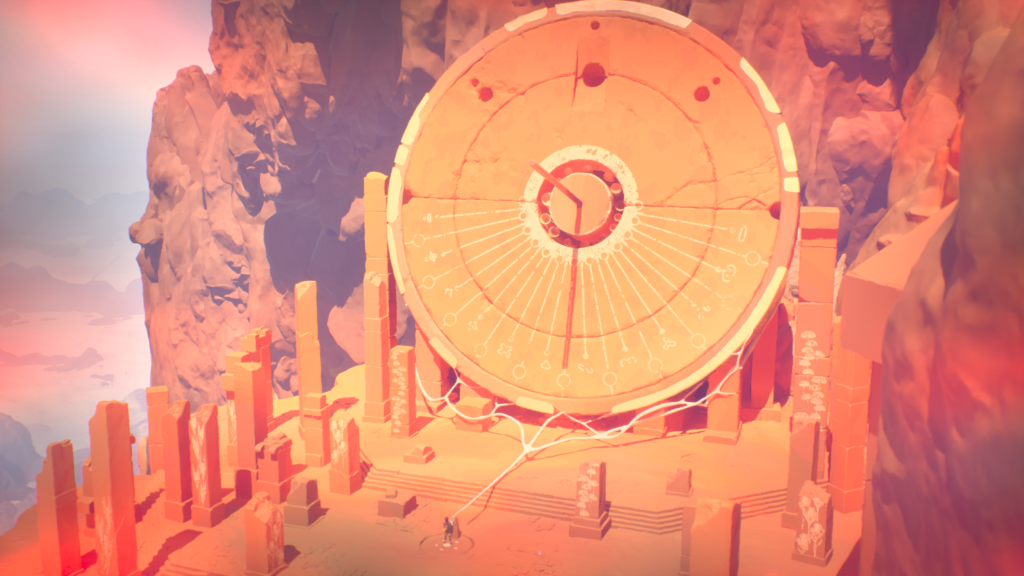
You play as a nameless climber, dropped into a towering, desolate landscape that immediately feels like it’s been abandoned for far longer than anyone remembers. As you climb higher, fragments of the past begin to surface — not in a dramatic way, but quietly, through objects left behind and voices that echo from another time. Slowly, you start to realise this isn’t just about reaching the top. It’s about understanding what was lost, and maybe nudging the world towards healing rather than fixing it outright.
Quite early on, through the breadcrumbs of story, pacing, immersion, and music, you begin to realise that the game is quietly pulling you along an emotional heart warming journey.
Gameplay & Mechanics
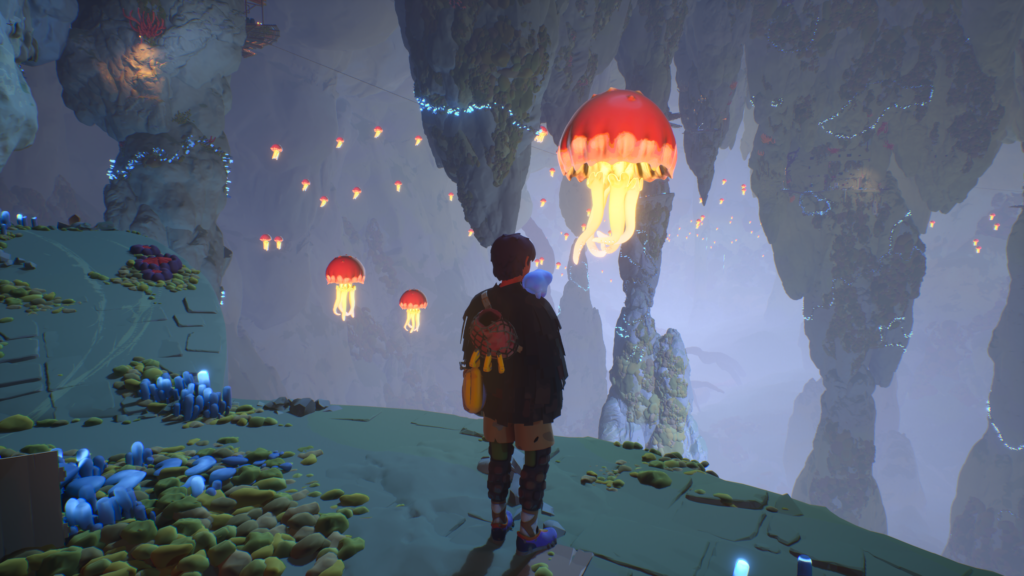
At its core, Jusant is about climbing — and I’ll be honest, that sounds far more limited than it actually feels. There’s something almost meditative about the rhythm of it: planning a route, managing stamina, securing ropes, and committing to a climb knowing you’ll have to deal with the consequences if you misjudge it.
The controls settle in quickly and start to feel intuitive in a way that’s hard to describe until you’ve played it. You’re not fighting the mechanics; you’re working with them. There’s a real sense of physicality to each ascent, and every successful climb feels earned without ever becoming stressful.
It’s mostly relaxed, but not mindless. There are moments where the path forward isn’t immediately clear, and the game expects you to stop, look around, and think — like games used to, not always holding your hand every step of the way. The windmill section caught me out more than I’d like to admit — enough that I briefly broke immersion and checked a guide to figure out what on earth I had to do. Even then, it didn’t feel like the game had failed me. It felt like I’d rushed instead of listening.
From a technical standpoint, it’s largely smooth. The cel-shaded style helps keep performance consistent, and while movement near tight edges can occasionally feel a bit awkward, it’s never more than a minor irritation. A quick reset and you’re back in the flow.
Graphics & Sound
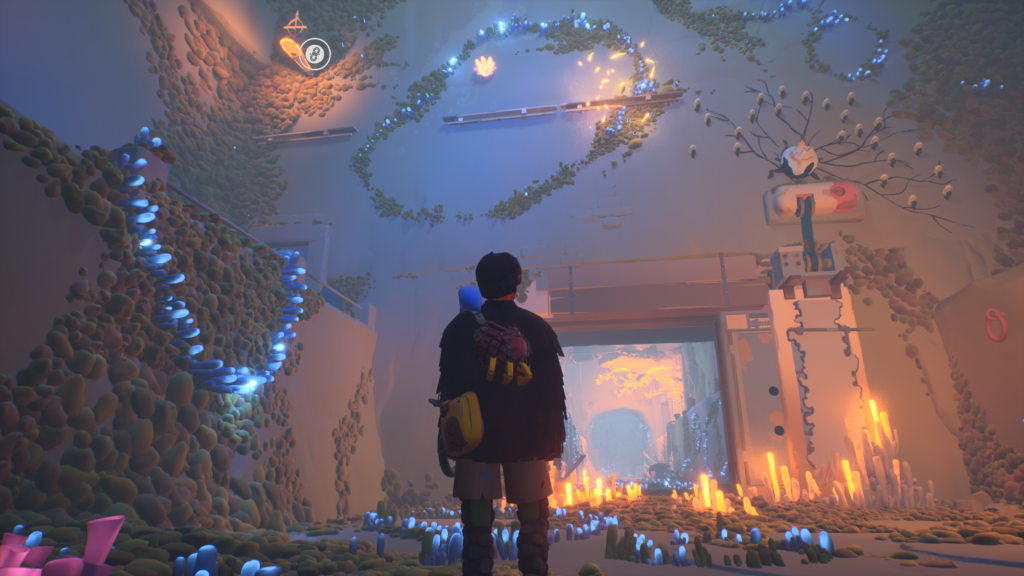
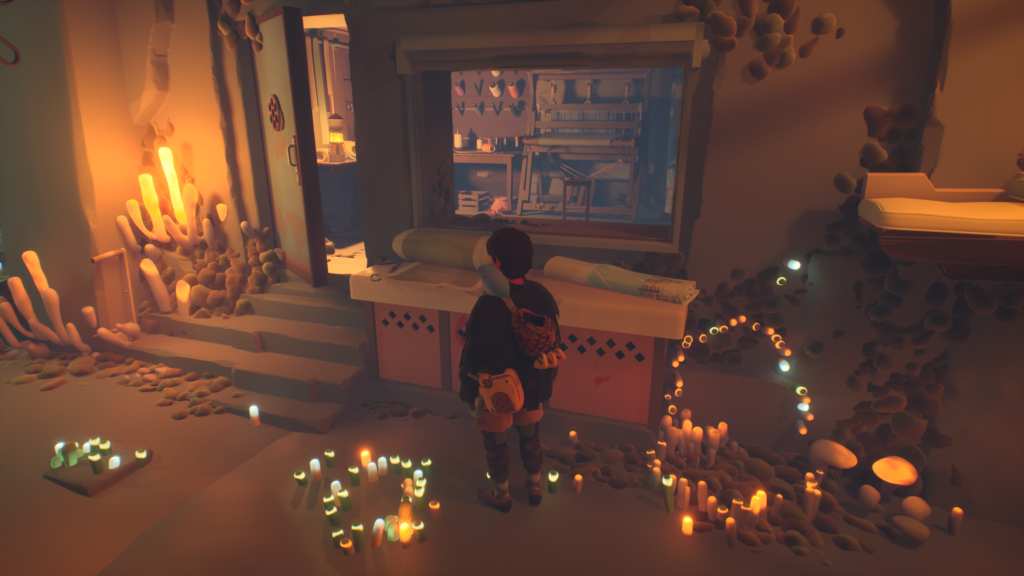
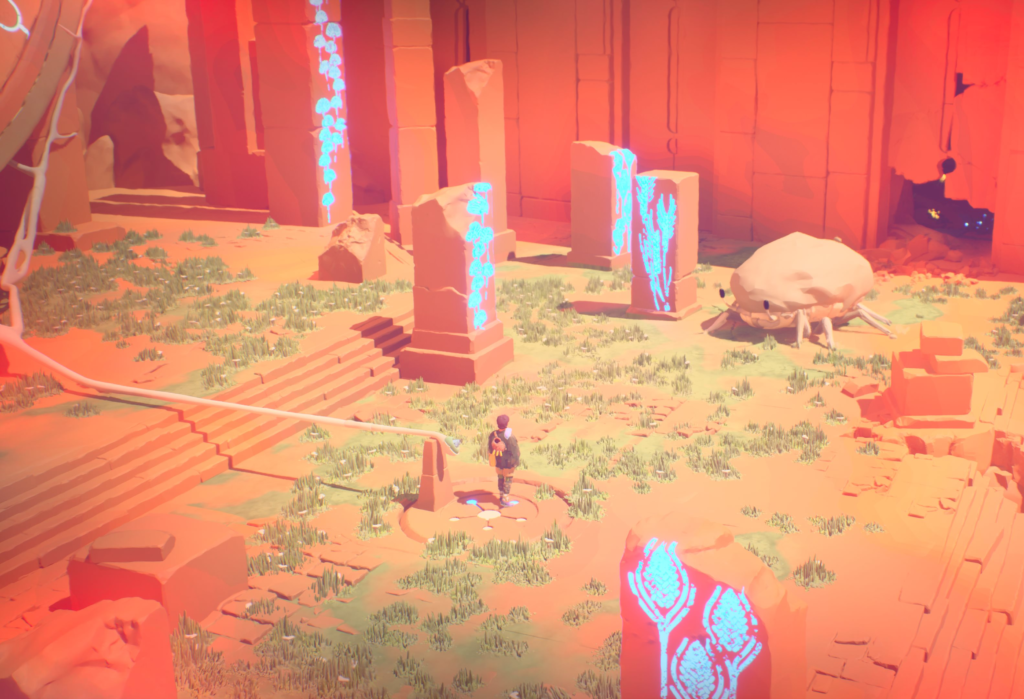
Visually, Jusant is quietly stunning. Not in a flashy, screenshot-bait way, but in how confidently it uses restraint. The HDR implementation in darker cave sections is genuinely mind-blowing, with bioluminescent plants and soft lighting creating spaces that feel safe, almost comforting, despite the surrounding decay. At times it genuinely made me pause, look around, and simply take in the environment.
The world reacts to you in small ways — plants extending to offer handholds, subtle environmental shifts that make the landscape feel alive rather than static. Sometimes these interactions serve a gameplay purpose. Other times, they exist simply to remind you that this world still has a pulse. You get a real sense of what once was, a sense of place, and a hint that you are now part of the journey.
The soundtrack knows when to stay out of the way. Long stretches are carried by ambient sound — wind, distant movement, faint creature noises — and when the music does rise, it’s always in service of the moment. During tougher climbs, the score swells just enough to raise tension without breaking the calm the game works so hard to build. This is then countered by beautiful echoes triggered by simple interactions with the world around you.
Story & World
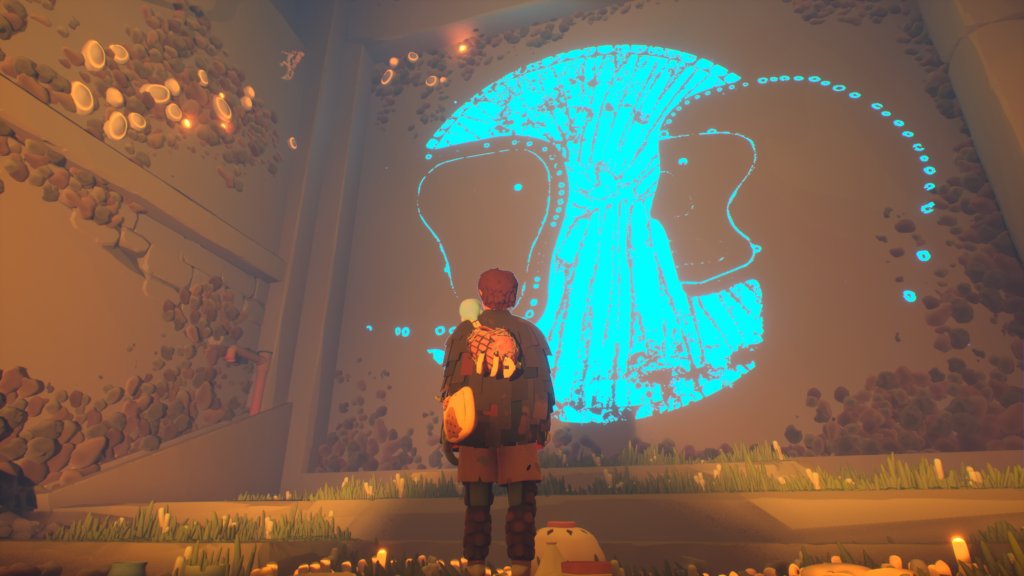
Jusant’s storytelling is understated to the point that it might frustrate players who want clear answers. There’s no exposition dump waiting at the top. Instead, the story is pieced together through letters, artefacts, and audio echoes scattered across the climb.
Your character remains intentionally undefined, which initially feels odd but quickly makes sense. You’re not meant to project onto them — you’re meant to observe the world itself. The real characters are the places, the remnants, and the lives hinted at through what’s been left behind. That true sense of place.
I found myself reading enough to understand the emotional weight without obsessively collecting everything. That balance felt right. That said, I am likely to go on an achievement hunt at some point. Jusant never pressures you to consume its story in full; it allows you to engage with it at your own pace, on your own terms.
While traditional dialogue is sparse, the writing hidden in collectibles adds layers to the experience. Whether you skim through them or read every detail, these fragments help flesh out the world in a way that feels organic rather than forced.
Replayability & Value
A full playthrough sits comfortably around 6–8 hours, which feels exactly right. Long enough to leave an impression, short enough that it doesn’t overstay its welcome. In an industry obsessed with scale and value measured in hours, Jusant feels refreshingly confident in its restraint.
On repeat runs, I explored a bit more and picked up things I’d missed, but I was careful not to turn it into a checklist, especially on my first playthroughs. It feels like the kind of game that loses something if you approach it like a completion task. It’s better experienced as a journey you pass through rather than one you try to conquer.
There’s no DLC, no expansions, and honestly, it doesn’t need them. The experience feels complete — contained, even — and stronger for it.
Final Thoughts
Jusant isn’t loud, and it isn’t trying to stay in the conversation long after release. It simply exists, quietly confident, waiting for the right moment to be played.
For me, it was a reminder that games don’t always need to challenge, overwhelm, or consume your time to matter. Sometimes they just need to give you space — to think, to feel, and to breathe for a few hours.
It’s a short journey, but one that lingers. And yes, for the right player, it might even catch you off guard emotionally (“I’m not tearing up, there must be dust in my eye”).
If you’re drawn to atmospheric, reflective experiences — the kind that value mood over mechanics and feeling over friction — Jusant is well worth your time.
Learn more about Jusant on the official DON’T NOD website.
Have you played Jusant? What did you think of the climbing mechanics and immersive world? Drop a comment below and let’s discuss! If you enjoyed this review, consider sharing it with fellow indie game lovers or following us for more gaming insights!
More from Retro Tech Tonic
- Why Do We Game? The Honest Reasons I Keep Coming Back – A reflective look at joy, immersion, nostalgia and self-reward — and why gaming still matters in everyday life.
- Call of Duty: Modern Warfare Remastered Review – a revisit that shows how well a classic campaign can hold up with the right treatment.
- Terminator 2D: No Fate Review – an arcade-leaning throwback that gets straight to the point and doesn’t waste your time.
- Best Way to Play PS2 Games in 2026: PS3 vs PS2 FAT Mod
- Retroid Pocket 6 vs Pocket 5: Why I’m Not Upgrading Just Yet
- The Division (2016) Review: Still the Best Winter World in 2026

About the Author
I am Danny McGough, the founder and editor of Retro Tech Tonic.
For my day job, I work in higher education as an Assistant Professor and Course Director, spending my time designing and managing complex academic structures and modules or exploring into any research that interests me . My latest specialisms are around Building Information Modelling, Construction Innovation and Artificial Intelligence.
Retro Tech Tonic is where I step away from that institutional rigidity. It is my dedicated space to pick up a soldering iron, argue the architectural value of physical game media, and push back against the frictionless convenience of modern tech. I believe technology should serve as an intentional, human-controlled tool, and I write to figure out exactly where those boundaries lie.
Pingback: Call of Duty: Modern Warfare Remastered - A Nostalgic Ride Through a Classic - Review - RetroTechTonic
Pingback: Stepping Back From Game Pass: Reclaiming Intentional Gaming - RetroTechTonic
Pingback: AI and Gaming Future: when games start making themselves - RetroTechTonic